
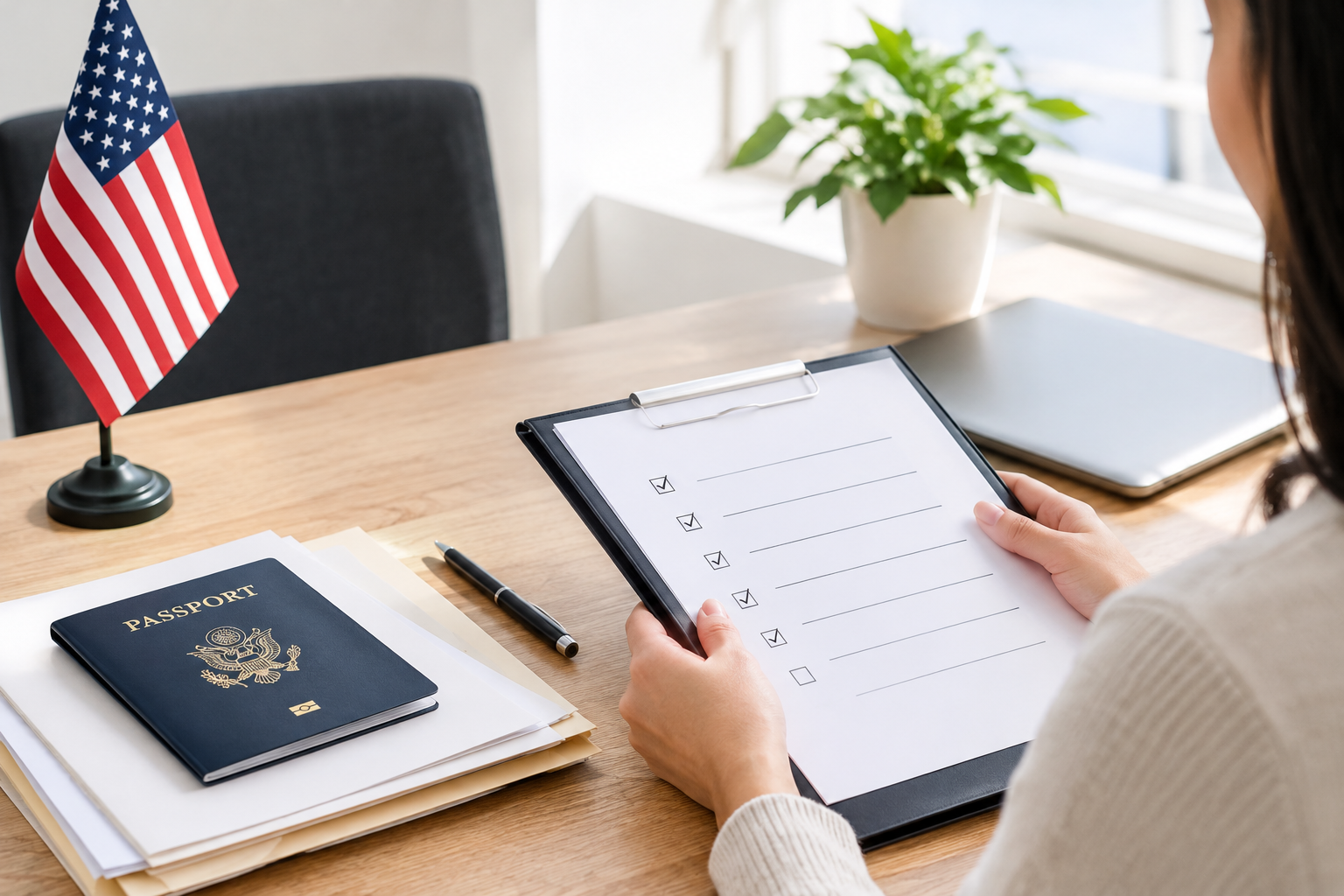
You have the notice in your hand. The date is set. Your stomach drops a little.
That reaction is normal. A USCIS immigration interview can feel like a test of your whole future, but it usually is not as scary as it sounds. Most interviews run short, and the officer mostly checks that your application is true, complete, and consistent. Good preparation helps you walk in calm and walk out with fewer surprises.
This guide covers what happens at the interview, what to bring, the questions you can expect, and the mistakes worth avoiding. It focuses on green card and citizenship interviews at a USCIS field office, which many New York families face.
What a USCIS Interview Is For
An interview gives the officer a chance to confirm what you put on paper. The officer compares your answers with your forms, reviews your documents, and decides whether you meet the requirements.
Different cases get different interviews:
- Marriage-based and family-based green card cases (adjustment of status): The officer checks your eligibility and, in marriage cases, whether your marriage is genuine.
- Citizenship (naturalization) cases: The officer reviews your application and tests your English and your knowledge of U.S. civics and history.
- Consular processing: If you are applying from abroad, your interview takes place at a U.S. embassy or consulate, not at USCIS. The process differs, so this article does not cover it.
Not everyone gets an interview. USCIS can waive it in some cases. Do not assume you will skip it, and do not assume you will not. Your notice will tell you.
Start With Your Interview Notice
Read the notice carefully, then read it again. It tells you the date, time, and location. It also lists what you must bring and who must attend.
Three habits protect you:
- Note the exact office and address. Check the location a few days ahead, not the night before.
- Follow the document list on the notice. USCIS can ask for different items in different cases.
- Reschedule early if you must. If you cannot attend, ask USCIS to reschedule before the date. A missed interview without a good reason can lead to a denial.
What to Bring
Your notice controls the list. These items are common, and you should expect to bring most of them:
- The interview notice itself.
- Your passport and any other valid government photo ID.
- Your current green card, work permit, or other immigration documents, if you have them.
- Original copies of the documents you sent with your application, plus a full copy of the filing.
- Updated evidence if anything changed since you filed.
- Any item the notice specifically requests, such as a sealed medical exam if USCIS asks for it.
In a marriage case, bring evidence that shows your life together. Joint leases or mortgages, bank statements, insurance policies, tax returns, utility bills, and photos from different periods can all help. Quality matters more than volume. A modest, organized folder beats a suitcase of random papers.
Bring anything new, too. Did you change jobs, move, have a child, or take a trip? The officer will ask, and you should have the paperwork.
Who Else Can Come With You
Your spouse. In a marriage-based case, your spouse generally must attend. The officer may question you together or separately.
Your attorney. You have the right to bring one. The attorney files a Form G-28, which tells USCIS who represents you. Having a lawyer present does not hurt your case.
An interpreter. If you are not comfortable in English, you may be able to bring an interpreter. USCIS has changed its interpreter rules in recent years, so read your notice and the current USCIS guidance before the day. If you bring one, the interpreter must be a competent, neutral adult who translates word for word. Both of you usually sign a form, Form G-1256, before the interview begins. A spouse generally should not serve as the interpreter in a marriage case.
What Happens in the Room
You check in at the front desk, go through security, and wait. When the officer calls your name, you walk back together with anyone attending.
The officer will ask you to raise your right hand and swear to tell the truth. Then the questions begin. Most interviews are brief, but the length varies a lot from case to case.
USCIS Interview Questions: What to Expect
The questions depend on your type of case. Here are the main patterns.
In a green card interview
The officer reviews your application, often line by line. Expect questions about:
- Your name, birth date, address, and family.
- Your immigration history: how and when you entered, and your past visas.
- Your work and your income.
- Any arrests, citations, or prior immigration problems.
- Your plans for the future.
In a marriage-based case
Beyond the basics, the officer wants to see a real shared life. Questions might include:
- How you met and when you decided to marry.
- Where you live and who handles which chores.
- What your daily routines look like.
- How you manage money.
- Who attended your wedding.
Don’t memorize a script. Rehearsed answers sound false, and real couples forget small details all the time. Instead, talk with your spouse before the interview about your shared history so you both refresh your memory. Then answer honestly. If you disagree on a small detail, say so. Officers know real marriages are messy.
In a citizenship interview
The officer goes through your N-400 application and asks about your background, your time in the United States, and your good moral character. You also take an English test and a civics test.
USCIS has updated the civics test in the past. Confirm which version applies to your filing date, and study from the official USCIS materials. Some applicants qualify for exemptions or accommodations, so ask about that early if it affects you.
Immigration Interview Tips That Actually Help
Most advice online sounds the same. These points matter in practice.
Tell the truth, always. A truthful but imperfect answer is better than a polished lie. Misrepresenting something to USCIS can create problems far bigger than the original issue.
Answer what the officer asks, and stop. Don’t volunteer long stories. Short, direct answers keep you out of trouble.
Ask for clarification. If you do not understand a question, say so. Guessing leads to wrong answers.
Say “I don’t remember” when it’s true. Don’t invent a date to fill a gap.
Stay calm if the officer seems blunt. Some officers are brisk. That does not mean your case is going badly.
Arrive early. Build in time for travel, parking, and security. New York traffic and subway delays do not count as excuses. Plan for them.
Dress neatly. You don’t need a suit. Clean and respectful is enough.
Complications That Call for Legal Advice First
Some situations need a lawyer before the interview, not after. Talk with an attorney if any of these apply:
- You have an arrest, charge, or conviction, even an old one or one that was dismissed.
- You ever overstayed a visa, entered without inspection, or worked without authorization.
- You have a prior denial or a past immigration court case.
- Your marriage has changed since you filed, for example a separation.
- You have any question about whether you should attend at all.
A lawyer can also tell you what to expect at your specific office and whether anything in your history needs a plan.
What Happens After the Interview
You may get one of several results:
- Approval. The officer may tell you the case looks approved, or USCIS may mail the decision later.
- A request for more evidence. USCIS sends a notice with a deadline. Respond fully and on time.
- A pending decision. Some cases need more review, and USCIS mails the result.
- A denial. USCIS explains the reason in writing. Talk with an attorney quickly about your options.
In some marriage-based cases, approval comes with a two-year conditional green card instead of a ten-year card. Your notice and approval documents will explain which one applies to you, and an attorney can confirm what steps come next.
Frequently Asked Questions
Many interviews last under an hour, but there is no fixed length. Complicated cases, or cases with questions about your history, take longer. Plan to spend part of your day at the office.
An interview is not a pass-or-fail exam in most cases, but the officer can deny your case or ask for more evidence. Citizenship interviews do include English and civics tests, and you usually get a second chance to retake the parts you fail.
No. You can attend without one. But you have the right to bring an attorney, and many people with any complicated history choose to. Ask your lawyer to confirm the attendance format for your case, since USCIS procedures can change.
Tell the officer, and bring proof. A move, a new job, a new child, or a change in your marriage all matter. Hiding a change causes bigger trouble than reporting it.
Ask to reschedule before the date, and follow the instructions on your notice. Keep proof that you made the request.
Your Next Steps
Start with your notice. Gather your documents. Review your application so your answers match what you filed. If you applied through a family member, our guide to family immigration services explains the main paths. For the bigger picture, see The Complete U.S. Immigration Process. If you wonder whether you need help, our article on what an immigration lawyer does and when you need one can help you decide.
USCIS rules, procedures, and forms change. This article gives general information, not legal advice. Verify current requirements on the USCIS website and in your notice before your interview.
If you have an interview coming up and questions about your case, speak with a qualified immigration attorney before the date. E-Z Immigration offers consultations at its White Plains office and by secure video. Reach the team through the contact page or at (914) 946-3191.