
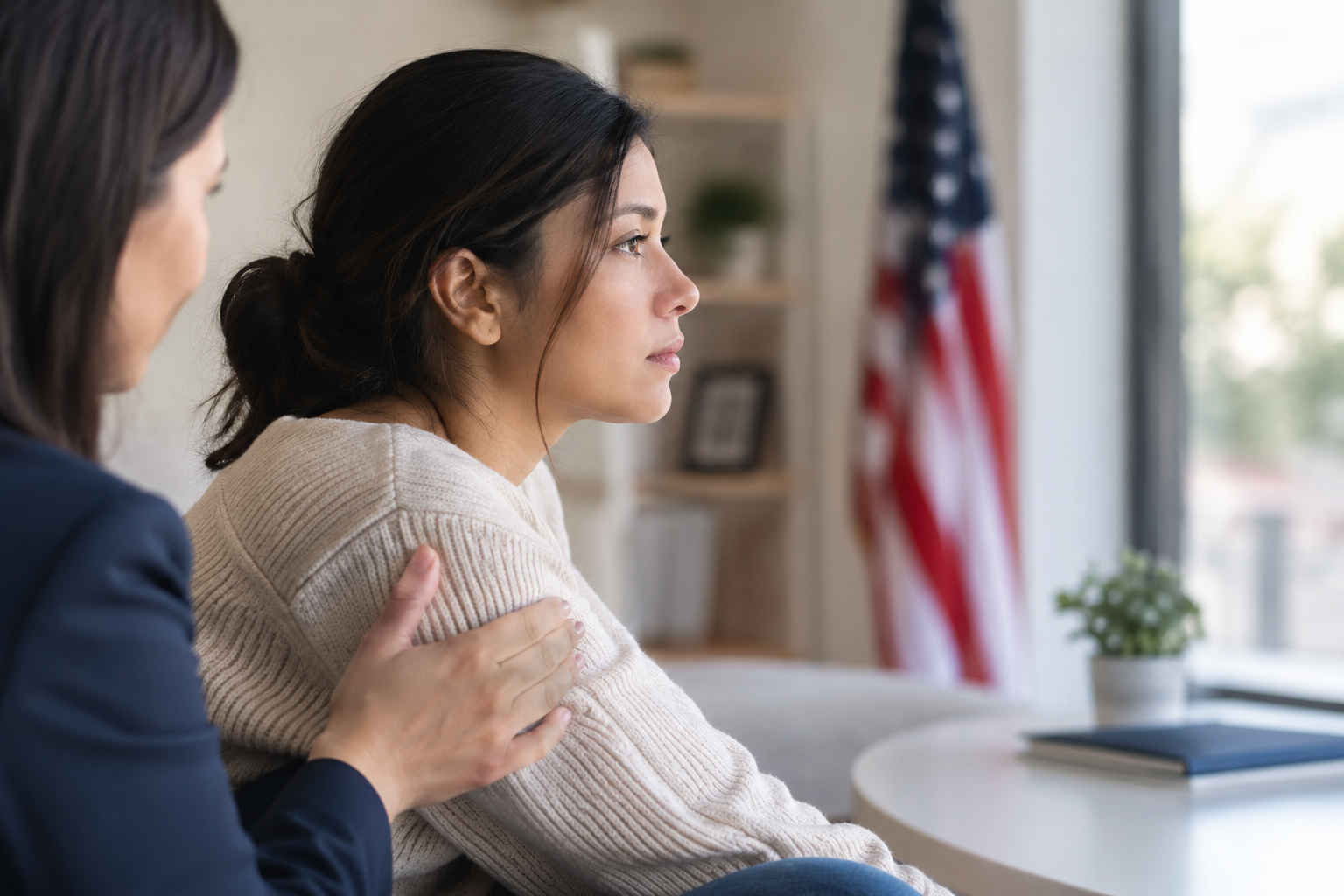
If you are an immigrant living with abuse, you may believe you have no way out. Maybe your partner threatens to call immigration if you leave. Maybe they refuse to file your papers. Maybe they say no one will believe you.
That fear is real, but the belief behind it is wrong. U.S. law includes several protections built for people in exactly your situation. Domestic violence immigration options exist so that an abuser cannot use your immigration status as a weapon.
This guide explains the main paths, what each one requires, the mistakes that hurt cases, and how to start safely.
This article is general information, not legal advice. Immigration rules and agency policies change, so talk to an attorney about your specific situation.
Why Immigration Status Becomes a Tool of Abuse
Abusers often use status to control their victims. Common tactics include:
- Threatening to report you to immigration authorities
- Refusing to file or withdraw a green card petition
- Hiding your passport, work permit, or other documents
- Telling you that you will lose your children if you leave
- Saying that police will side with a citizen over you
Congress recognized this problem decades ago. Several laws now let victims seek legal status on their own, often without the abuser’s knowledge or help.
The Main Immigration Options for Domestic Violence Victims
The right option depends on who your abuser is, your relationship to them, and what happened. Here are the most common paths.
VAWA Self-Petition
VAWA stands for the Violence Against Women Act. Despite the name, it protects people of any gender. A VAWA self-petition lets you ask for a green card on your own, without your abuser signing anything or even knowing you applied.
You file it with U.S. Citizenship and Immigration Services (USCIS) on Form I-360. The form is called a “self-petition” because you, not your abuser, start the case.
Who may qualify:
- The spouse of a U.S. citizen or green card holder who abused you
- A child (unmarried and under 21) abused by a citizen or green card holder parent
- The parent of a U.S. citizen son or daughter who abused them
- A parent whose child was abused by the parent’s own abusive spouse
What you generally need to show:
- You have a qualifying relationship with the abuser
- The abuser is, or was, a U.S. citizen or lawful permanent resident
- You suffered battery or “extreme cruelty,” which includes physical violence and also psychological, sexual, and coercive abuse
- You lived with the abuser at some point
- You entered the marriage in good faith, meaning it was genuine and not just for papers
- You have good moral character
Divorce does not automatically end your options. In many cases you can still file after a divorce, but strict time limits apply. That is one reason not to wait.
Battered Spouse Waiver (For Conditional Green Card Holders)
Some people receive a two-year “conditional” green card through a recent marriage. Normally, the couple must file together to remove those conditions. An abusive spouse can use that requirement to trap you.
If you suffered abuse, you can file to remove the conditions on your own with a waiver of the joint filing requirement. You do not need your spouse’s signature, and you do not need to stay married.
Timing matters here. Talk to an attorney before your conditional card expires.
U Visa for Crime Victims
The U visa protects victims of certain serious crimes who help law enforcement. Many crimes connected to domestic violence, such as felonious assault, sexual assault, and stalking-related offenses, can qualify.
In simple terms, you generally need to show that:
- You were the victim of a qualifying crime
- You suffered substantial physical or mental harm
- You have helpful information about the crime
- You have been, are being, or are likely to be helpful to police or prosecutors
A law enforcement agency, prosecutor, or judge must usually sign a certification form saying you cooperated. The U visa can lead to temporary status, work authorization, and later a green card.
The U visa has an annual cap, and wait times can be long. Read our complete U visa guide for victims of crime in New York or our post on applying for a U visa after being a victim for more detail.
Special Immigrant Juvenile Status (SIJS)
Children and young people who suffered abuse, neglect, or abandonment by a parent may qualify for Special Immigrant Juvenile Status. This path involves a state family court order, followed by an immigration application. Our guide to SIJS for New York families explains how it works.
Other Forms of Immigration Protection
Depending on your facts, other options may apply:
- T visa: If abuse also involves human trafficking, forced labor, or coerced commercial sex.
- Cancellation of removal for abused spouses and children: A defense you can raise in immigration court if you are already in removal proceedings.
- Asylum: Some domestic violence survivors fear returning to their home country. Asylum has strict rules and deadlines, so review what to know about applying for asylum and speak with a lawyer early.
What Happens After You File?
Every case is different, but VAWA cases often follow this general path.
1. You file and receive a receipt. USCIS confirms it received your petition.
2. USCIS reviews your evidence. It may ask for more documents through a Request for Evidence.
3. You may receive approval. An approved VAWA petition can lead to deferred action, which is a form of protection from removal, and you may be able to apply for a work permit.
4. You seek a green card. If a visa is available to you, you apply for permanent residence. This step is often possible right away for spouses and children of U.S. citizens. Relatives of green card holders may have to wait for their priority date to become current.
Federal law also limits how the Department of Homeland Security can use information provided by an abuser and restricts sharing your information. This confidentiality is one reason many people feel safer moving forward.
What Evidence Can Support Your Case?
You do not need a police report or protective order to qualify for VAWA. Many survivors never called the police. Useful evidence can include:
- Your own detailed written statement
- Medical or hospital records
- Photos of injuries or damaged property
- Police reports or court records, if they exist
- Letters from counselors, doctors, clergy, shelter staff, or advocates
- Text messages, emails, and voicemails
- Proof of the relationship, such as a marriage certificate, lease, bills, or children’s birth certificates
Keep copies in a safe place your abuser cannot reach, such as with a trusted friend, an advocate, or an attorney.
Common Mistakes That Can Hurt Your Case
Avoid these problems.
Waiting too long. Some deadlines, especially after divorce or an abuser’s death, cannot be extended. Ask about timing early.
Assuming you need the abuser’s cooperation. For VAWA, you do not.
Signing forms you don’t understand. Never sign a document unless you know what it says.
Using a “notario” or unlicensed helper. In many Latin American countries, a notario is a licensed attorney. In the U.S., it is not, and unlicensed helpers can damage your case. Only attorneys and accredited representatives can give legal advice.
Hiding your history. Past arrests, immigration violations, or prior applications will surface. Tell your attorney everything so they can plan around it.
Giving inconsistent stories. Write your timeline carefully and keep it consistent across all forms and interviews.
Skipping safety planning. Do not leave paperwork, letters, or a search history where an abuser can find them.
A Realistic Example
Consider Maria, a hypothetical client. She married a U.S. citizen three years ago. He controlled her money, threatened to have her deported, and told her he “never filed” her green card papers. Maria never called the police because she feared that would make things worse.
Maria may still have options. She could be eligible for a VAWA self-petition if she can show the relationship, the abuse, and her good faith in the marriage. Her own statement, medical notes, messages from her husband, and a letter from a counselor could form the core of her case.
This is an illustration, not a prediction. Every case turns on its own facts.
How to Get Help Safely
If you are in immediate danger, call 911. For confidential support, contact the National Domestic Violence Hotline at 1-800-799-7233 (SAFE). Advocates can help with safety planning and local resources, and the line offers interpretation in many languages.
Frequently Asked Questions
USCIS does not notify the abuser, and federal confidentiality rules restrict how the government can use and share your information. Still, talk to your attorney about how to keep mail and communications private.
Yes. Many VAWA and U visa applicants have no current legal status. Your attorney can review any risks based on your history.
Yes. VAWA protects victims of any gender.
You may still qualify. The timeline to a green card can differ, though, because you may need to wait for a visa to become available.
Not always. A divorce may not end your eligibility, but deadlines apply.
Talk With E-Z Immigration
You do not have to sort through these options alone. The team at E-Z Immigration can review your situation, explain which protections may fit, and help you prepare a strong, well-documented case. If you’re ready to talk, contact E-Z Immigration to schedule a confidential consultation.
Abuse is not your fault, and your immigration status does not have to keep you trapped. Help is available.
Pingback:E-1 Visa Requirements: How to Obtain Treaty Trader Visa