
K-1 Fiancé(e) Visa

K-1 Fiancé(e) Visa Lawyer in New York

Personalized legal guidance for couples navigating the K-1 fiancé(e) visa process, from petition preparation through consular processing and visa interview preparation.

K-1 Fiancé(e) Visa

K-1 Fiancé(e) Visa Lawyer in New York

Bring Your Fiancé(e) to the United States With a K-1 Visa

If you are a U.S. citizen engaged to someone who lives outside the United States, the K-1 Fiancé(e) Visa may allow your fiancé(e) to come to the U.S. so you can get married and begin building your life together.

At E-Z Immigration, we help couples navigate the K-1 visa process, from preparing the initial petition to navigating consular processing and preparing for the visa interview.

Every relationship and immigration history is different. Our team provides personalized legal guidance so you understand the requirements, documentation, and steps involved in your case.

Explore our broader Family Immigration Services or speak with our team about your specific immigration situation.

K-1 visa explained

What Is a K-1 Fiancé(e) Visa?

A K-1 visa is a temporary, nonimmigrant visa that allows the foreign fiancé(e) of a U.S. citizen to travel to the United States for the purpose of getting married.

After entering the United States on a K-1 visa, the foreign fiancé(e) must marry the same U.S. citizen who filed the petition within 90 days of admission. After the marriage, the spouse may be eligible to apply for lawful permanent residence through adjustment of status.

The K-1 process involves multiple government agencies and stages, so preparing the petition and supporting evidence correctly is important.

K-1 Visa Requirements

Who Is Eligible for a K-1 Visa?

Generally, a K-1 visa may be appropriate when:

The petitioner is a U.S. citizen.

The couple intends to marry each other.

Both individuals are legally free to marry.

The couple generally met in person during the two years before the K-1 petition was filed.

Both parties genuinely intend to marry within 90 days after the foreign fiancé(e) enters the United States.

The relationship meets the applicable immigration requirements.

The foreign fiancé(e) is otherwise eligible for the visa and admissible to the United States.

There can be exceptions to the in-person meeting requirement in limited circumstances, including certain situations involving extreme hardship or established cultural or social practices. Evidence supporting an exception may be required.

Because eligibility can depend on your individual circumstances, it is important to have your situation reviewed before filing.

Engaged couple preparing for the K-1 fiancé visa process

The K-1 visa process

K-1 Fiancé(e) Visa Process

The K-1 visa process generally involves several stages involving USCIS, the National Visa Center, the U.S. Department of State, and U.S. Customs and Border Protection.

Step 1: File Form I-129F

The U.S. citizen petitioner begins the process by filing Form I-129F, Petition for Alien Fiancé(e) with USCIS.

The petition must establish that the relationship qualifies for K-1 classification and that both parties intend to marry within the required period.

Step 2: USCIS Reviews the Petition

USCIS reviews the petition and supporting evidence. Background checks may also be conducted.

If USCIS approves the petition, it is generally forwarded to the Department of State's National Visa Center for further processing. An approved I-129F petition does not itself guarantee that the K-1 visa will be issued.

Step 3: National Visa Center Processing

The National Visa Center processes the approved petition and sends the case to the appropriate U.S. embassy or consulate where the foreign fiancé(e) will apply for the visa.

Step 4: Medical Examination and Visa Interview

The foreign fiancé(e) generally completes the required medical examination and prepares the documents required for the visa interview.

The applicant may need evidence demonstrating the genuine nature of the relationship, along with required civil, financial, and immigration documents.

Step 5: K-1 Visa Issuance and Travel

If the visa is approved, the foreign fiancé(e) can travel to the United States and seek admission.

A K-1 visa generally permits a single entry, and visa issuance does not guarantee admission to the United States. The final admission decision is made by CBP at the port of entry.

Step 6: Marriage Within 90 Days

After entering the United States, the K-1 visa holder must marry the same U.S. citizen petitioner within 90 days.

Step 7: Adjustment of Status

After marriage, the foreign spouse may be eligible to apply for lawful permanent residence through the adjustment of status process.

Our team can help you understand the next stage of your immigration journey and whether additional applications may be appropriate.

Talk With Our Team
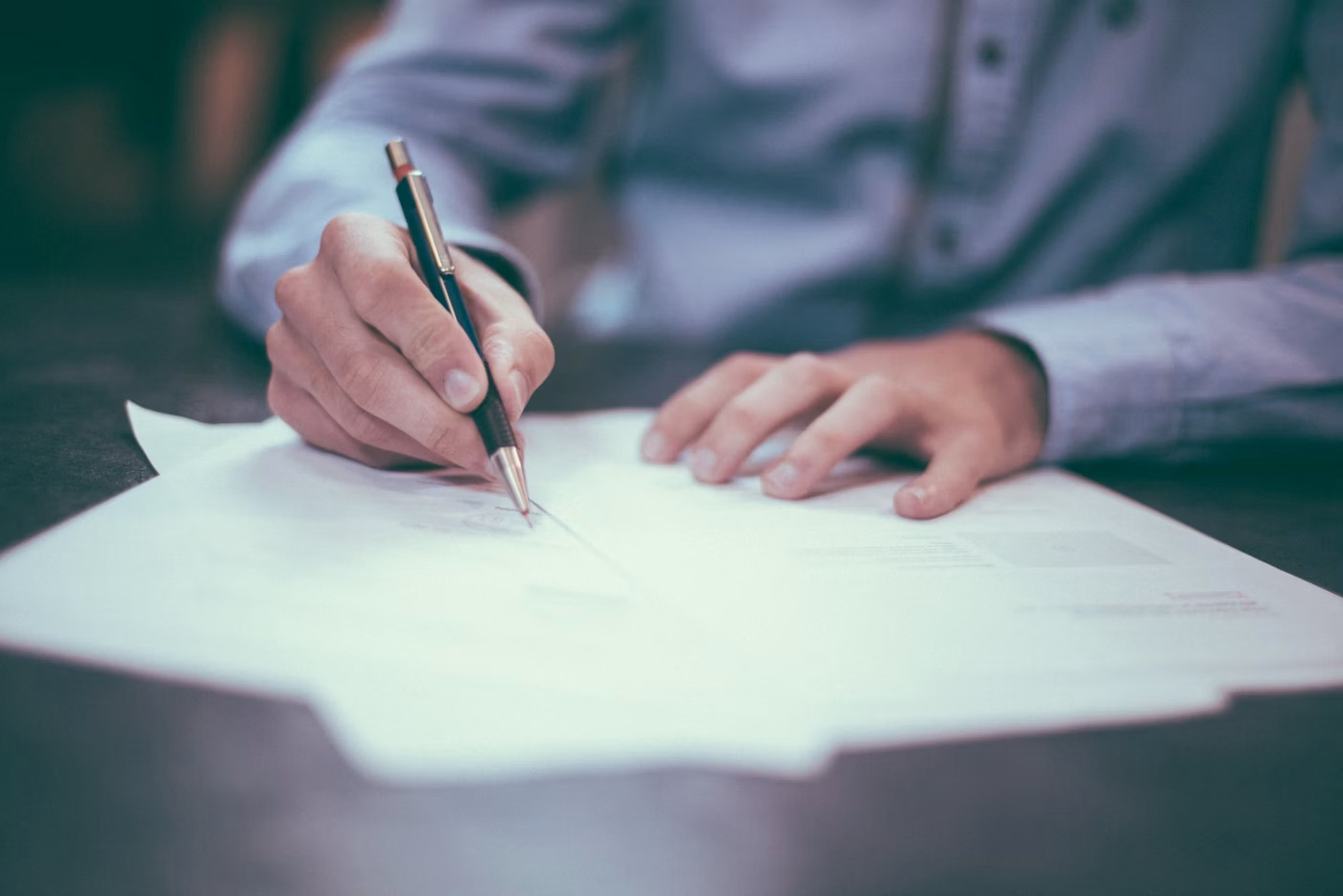
Documents and supporting evidence being reviewed
Depending on your circumstances, supporting documentation may include:

Preparing your petition

Documents and Evidence for a K-1 Visa

A successful K-1 petition requires more than simply proving that you are engaged.

  • Proof of U.S. citizenship of the petitioner
  • Valid identification documents
  • Passport-style photographs
  • Evidence that both parties are legally free to marry
  • Evidence of having met in person
  • Photographs together
  • Travel records and airline tickets
  • Communication records
  • Messages and correspondence
  • Evidence of shared experiences
  • Statements confirming the intention to marry
  • Divorce decrees or other documents relating to previous marriages, if applicable
  • Required financial and sponsorship documentation
  • Other evidence relevant to the relationship and immigration history

USCIS specifically requires evidence concerning the couple's intention to marry within 90 days and generally requires evidence that the couple met in person during the two years before filing.

The appropriate evidence depends on the facts of each relationship.

Engaged couple spending time together
Proving a Genuine Relationship

Relationship evidence

Proving a Genuine Relationship

One of the most important aspects of a K-1 visa case is demonstrating that the relationship is genuine.

Evidence may help show how the relationship developed and that you and your fiancé(e) genuinely intend to marry.

Depending on your circumstances, this may include:

  • Photos TogetherPhotos from visits, vacations, family gatherings, celebrations, and other occasions can help document your relationship.
  • Travel EvidenceFlight tickets, hotel reservations, passport stamps, and travel itineraries may help demonstrate that you have met in person.
  • Communication RecordsMessages, emails, call records, and other communications may help establish the history of your relationship.
  • Family and Social EvidenceEvidence showing that you have met each other's family members or participated in important events together may also be relevant.

The goal is not to submit as much evidence as possible. The evidence should be organized, credible, and relevant to your relationship.
Preparing for your appointment

K-1 Visa Interview Preparation

The visa interview can be an important part of the process.

Applicants may be asked questions about:

  • How the couple met
  • How long they have known each other
  • How the relationship developed
  • Previous visits and trips
  • Family members
  • Wedding plans
  • Previous marriages
  • The U.S. citizen petitioner
  • Plans after entering the United States

Preparing your documentation and understanding the interview process can help you approach the interview with greater confidence.

Understanding your options

K-1 Fiancé(e) Visa vs. Marriage Green Card

Couples often ask whether they should pursue a K-1 fiancé(e) visa or a marriage-based immigration process.

The right option depends on your circumstances.

Before marriage

K-1 Fiancé(e) Visa

A K-1 fiancé(e) visa is generally designed for a U.S. citizen who is engaged to a foreign national and wants the fiancé(e) to enter the United States for marriage.

Already married

Marriage Green Card

A marriage-based immigration process is generally used when the couple is already legally married.

Potential case issues

Common K-1 Visa Challenges

K-1 cases can become complicated when there are questions about eligibility, documentation, relationship history, or immigration background.

Common issues can include:

  1. Insufficient evidence of a genuine relationship
  2. Problems establishing the required in-person meeting
  3. Previous marriages
  4. Incomplete or inconsistent documentation
  5. Immigration violations
  6. Criminal history
  7. Prior visa refusals
  8. Inadmissibility issues
  9. Questions raised during the consular interview
  10. Changes in circumstances after filing

If you have concerns about your immigration history or your fiancé(e)'s eligibility, it is better to address them before filing rather than discovering a problem later in the process.

Professionals meeting together to discuss a K-1 visa case
Personalized immigration guidance

Why choose E-Z Immigration?

Why Choose E-Z Immigration for Your K-1 Visa?

Immigration cases are personal. A mistake in a petition or missing documentation can create unnecessary delays or complications.

At E-Z Immigration, we focus on:

  • Personalized immigration guidance
  • Careful petition preparation
  • Supporting-document review
  • Relationship evidence organization
  • Consular processing guidance
  • Interview preparation
  • Clear communication throughout the case
  • Guidance on potential immigration complications

Our goal is to make the process easier to understand while helping you prepare your case carefully from the beginning.

If you are looking for broader legal guidance, explore our Immigration Lawyer Services in New York.

Frequently asked questions

Frequently Asked Questions About K-1 Fiancé(e) Visas

Find answers to common questions about K-1 fiancé(e) visas.

Ask Our Team
How long does a K-1 visa take?

K-1 processing times can vary depending on USCIS processing, National Visa Center processing, the applicable U.S. embassy or consulate, background checks, and other case-specific factors. No specific processing time can be guaranteed.

Can a green card be obtained through a K-1 visa?

A K-1 visa itself does not provide permanent residence. After marrying the U.S. citizen petitioner within the required 90-day period, the foreign spouse may be eligible to pursue adjustment of status.

Do we have to meet in person before filing?

Generally, the couple must have met in person during the two years before filing the K-1 petition. Limited exceptions may apply in certain circumstances.

Can my fiancé(e) work in the United States?

Work authorization depends on the applicable immigration filing and status. The appropriate employment authorization process should be evaluated based on the circumstances of the case.

Can children of my fiancé(e) come to the United States?

Certain eligible children may potentially qualify for derivative K-2 visas. Their eligibility and documentation requirements should be reviewed as part of the overall case.

What happens if we do not marry within 90 days?

A K-1 admission is conditioned on marriage to the same U.S. citizen petitioner within the 90-day period. If the required marriage does not occur, immigration consequences may follow.

Can I apply for a K-1 visa if my fiancé(e) has been married before?

A previous marriage does not automatically prevent someone from qualifying. However, all previous marriages must generally be legally terminated, and appropriate documentation may be required.

What if my fiancé(e) was previously denied a U.S. visa?

A previous visa refusal does not automatically mean that a K-1 visa will be denied. However, the reason for the previous refusal should be carefully reviewed before proceeding.

Start Your K-1 Fiancé(e) Visa Journey

Start Your K-1 Fiancé(e) Visa Journey

Getting engaged is an exciting milestone. Navigating U.S. immigration should not take away from that experience.

If you are a U.S. citizen planning to bring your foreign fiancé(e) to the United States, E-Z Immigration can help you understand the K-1 visa process and prepare for the next stage of your immigration journey.

Scroll to top Scroll to top